
Carpet That Lies Flat and Stays That Way
Carpet installation in Raleigh for homes where subfloor condition, pad selection, and seam placement affect how long the finished floor performs
A decision that comes up often in older Raleigh and Durham homes is whether the original hardwood beneath existing carpet is worth uncovering or whether new carpet is the right call. That choice directly affects the subfloor preparation required, because leaving hardwood in place under carpet means the boards have to be checked for loose fasteners and high spots before any pad or tack strip goes down. 99 Service Solutions installs carpet in Raleigh with subfloor preparation, pad, and transitions included in the install — not as separate line items.
The install sequence begins with clearing the room and inspecting the subfloor across its full area, because high spots and loose boards cause carpet to wear unevenly and create visible ridges or soft spots underfoot within months of installation. Tack strips are secured around the perimeter, pad is laid and stapled flat, and then the carpet is stretched across the room and fastened to the tack strips before seams and edges are trimmed. Stretching is not optional — carpet that is laid without power stretching will develop ripples and waves as foot traffic loosens the material from the edges.
To evaluate your existing subfloor condition and discuss carpet and pad options, set up a site visit before any material is selected.
What Proper Carpet Installation Requires
Pad selection has a direct effect on how carpet feels underfoot and how long the carpet itself lasts. A pad that is too thick causes carpet to flex excessively at the seams, which accelerates fiber separation and edge fraying over time. A pad that is too thin reduces cushion without adding durability. Pad weight and density are matched to the carpet type and the traffic level of the room — a bedroom install uses different specifications than a hallway or a staircase. These decisions are made before the material is ordered, not adjusted on installation day.
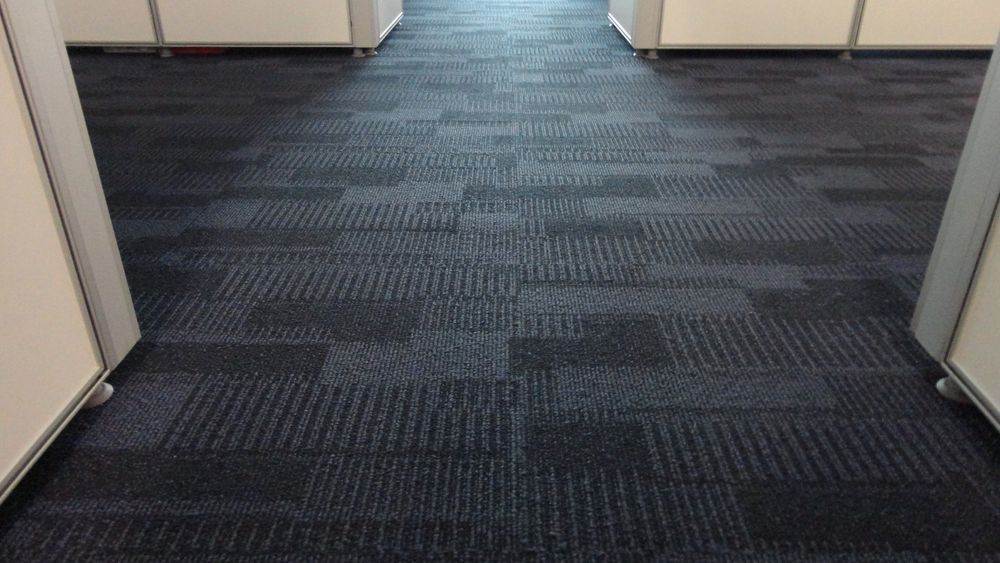
After installation, carpet should lie completely flat across the entire room with no ripples, no visible seam lines from above, and firm resistance when pressed at the edges near the tack strip. Transitions to hard floors at every doorway are finished as part of the same install, so the threshold between carpet and tile or LVP is clean and secured on the day the carpet crew completes the room. Seams, when necessary in larger rooms, are placed in low-traffic paths and pressed flat so they are not visible under normal lighting.
In Triangle homes where the underlying hardwood is structurally sound and the homeowner wants to preserve the option of uncovering it later, the subfloor preparation approach changes. In those cases, the tack strips and pad are installed in a way that does not damage the wood boards beneath, which keeps future refinishing viable without requiring full subfloor replacement.
Questions About the Carpet Installation Process
These questions are common when Raleigh homeowners are planning a carpet install, especially in rooms where the previous floor has not been removed yet and the subfloor condition is not known.
Why does carpet require power stretching rather than simply being laid flat?
Carpet that is hand-tucked rather than power-stretched lacks the tension needed to hold at the tack strips over time. Foot traffic loosens the material from the edges, and the result is visible rippling across the center of the room — a failure mode that becomes more pronounced as the carpet ages and is not repairable without re-stretching the entire field.
How does seam placement affect how long carpet looks good after installation?
Seams placed in high-traffic paths — directly in front of doorways, down the center of hallways — are walked on constantly, which causes the seam edges to separate and fray more quickly. Seams are planned before the carpet is cut so they fall in the least-trafficked areas of each room and are as inconspicuous as possible under normal lighting conditions.
What happens at the subfloor inspection if high spots or loose boards are found?
High spots are ground down or shimmed before tack strips are installed, and loose boards are refastened with screws rather than nails, which hold longer in older subfloor panels. Skipping this step means the finished carpet will telegraph those surface irregularities and wear unevenly directly above them.
How are transitions between carpet and hard flooring finished at doorways?
A transition strip is selected based on the height difference between the carpet surface and the adjacent hard floor. Where the surfaces are close in height, a flush or low-profile bar transition is used. A taller height difference requires a reducer profile so the transition does not create a raised lip that is a trip hazard at the threshold.
What should you check in a finished carpet installation to confirm it was done correctly?
Press at the edges near the wall to confirm the carpet is firmly held by the tack strip and does not pull loose easily. Walk the entire field and check for any area that feels soft or hollow underfoot, which indicates a subfloor issue beneath. Look across the room at a low angle in natural light to confirm no ripples or waves are visible across the surface.
99 Service Solutions also installs carpet in Durham, Chapel Hill, Cary, Wake Forest, and Garner. Contact 99 Service Solutions to schedule a room assessment and review pad and carpet options matched to the traffic level and subfloor condition of your Raleigh home.